By 492 B.C. King Darius put his plan in the hands of Mardonius who was young at this time and married to one of the Kings daughters.
Once a vast number of ships were gathered, he hastened to the Hellespont, to meet a large contingent of land forces. He conveyed his troops across the strait by means of his vessels, and proceeded through Europe against Eretria and Athens (the Greeks who were part of the Ionian revolt).
This was the pretext anyway, in reality they were going to subjugate as great a number as possible of the Grecian cities; and this became plain when the Thasians, who did not even lift a hand in their defence or were part of the Ionian revolt, were reduced by the sea force.
The land force met up with the other Persians who were left there from their previous expedition and headed straight into Macedonia, reducing them to slaves of the king.
By this time the sea fleet was trying to go around Mt Athos. But here a violent north wind sprang up, against the which nothing could contend, and handled a large number of the ships with much rudeness, shattering them and driving them aground upon Athos. The number of ships destroyed is reported to be just under 3,000 with 20,000 men dead. Death came in the form of drowning to which the Persians did not know how to swim, there were plenty for the sharks to feed upon, some where dashed violently against the rocks, others too by the coldness of the sea.
Mardonius and the land forces were having a hard time too. Somewhere on the border of Macedonia his camp was attacked during the night by a 'hairy' and otherwise unheard of Thracian tribe, and a vast number of Persians were slain, Mardonius also being wounded. They didn't receive the freedom they were after though as Mardonius reorganised his army and reduced them to slavery. Still the damage was done, with the fleet destroyed and the land forces being reduced considerably, Mardonius and the Persians returned to Asia in disgrace [1].
Having Mardonius returned unsuccessfully from Europe Darius was as determined as ever to punish the Athenians. He would spend two years in preparations, before he set out for Greece. But after one year, he sent heralds to the different states, demanding from each, earth and water. To give earth to the great king was to acknowledge him as ruler of their land, to give water was because he was the monarch of the sea, most prominent of these was the island of Aegina..
 Many of the states were afraid to refuse, and sent the earth and water which Darius demanded, but among these was neither Athens nor Sparta.
So indignant were these two cities that a barbarian, should send such a demand to the free States of Greece, that they treated his heralds with scant courtesy. The Athenians flung the messenger who came to their city into a deep pit (the pit of punishment), while he who went to Sparta was unceromoniously tossed into a old well. A Spartan screamed at him 'you can get your earth and water from down there.' [2].
Darius now didn't give up hope, offers came back from everywhere, one of the places was the small island of Aegina, just next to Salamis about 20 km from Athens. This Athens knew was too near to home, they sent embassies to Sparta. This pleased Athens to include Sparta at this time, having a good reason to speak to them for the first time and hopefully getting past the bad blood between them.
They made a charge to the Spartans that the island of Aegina now making an offering of earth and water to Darius made them traitors of Greece. The king of Sparta, Kleomenes I took a contingent and made his way to the island. As soon as he tried to arrest the leaders a number of Aeginetans made resistance. Crius, a Aeginan verbally abused the king, and ridiculing him by saying that 'if Sparta did want to arrest the leaders they would have sent both kings!'
The Spartans decided to leave and Kleomenes I parting words were 'Get thy horns tipped with brass with all speed, O Crius, for though wilt have to struggle with great danger (Crius meaning ram in Greek).
While in Sparta more trouble was brewing. The other king of Sparta, Demaratus was bringing charges on Kleomenes I. The two kings didn't get along whatsoever, remember also that Demaratus left Kleomenes I on the battlefield.
 On Kleomenes I return, he got wind of the trouble that Demaratus was saying about him. Kleomenes I formulated a plan.
When Demaratus' father was told that his wife had had a child and it was a boy, at first the father, who counted on his fingers said 'the boy cannot be mine' he said this infront of the Ephors. This he later regretted and as the boy grew up he knew it was his son. [3]
Kleomenes I now had the hook. In Sparta he planted doubt about the heir of the king not really being his son, his own father, the king; had said it himself and the Ephors heard it.
Things were getting very tense inside Sparta, to which even Demaratus had doubts, though his mother denied all wrong doing.
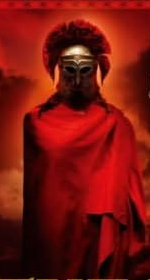
((Click on image to see a list of Spartan Kings in timeline)).
Kleomenes I organised Cobon who had great weight with the Dephins to buy off the Pythoness and with a family member of Demaratus, Leotychides, to remove Demaratus from office and then the kingship would pass on to the next available family member, which would be his.
Kleomenes I had only to sit and watch the plan all come to fruition. Leotychides, publicly made a oath that he wanted to sue Demaratus, as he wasn't the son of the king. The king had said so himself and he also produced the witness' who where the Ephors to this.
This caused a hugh uproar in Sparta, the likes to which had never been seen before. Finally, it was decided that the question of the heir of the king be taken to Delphi. Where Kleomenes I got the response he was after 'that Demartatus was not Ariston's son.'



